Stories evolve because the AI remembers what matters.
AI Scenario uses persistent memory systems to maintain emotional continuity, relationship progression, major events, character behavior, and long-term narrative development across your stories. Instead of resetting every conversation, the world grows alongside your choices.
Mastering the Memory Systems
The Memory UI is the nerve center of your narrative. While the AI automatically logs events and monitors character knowledge, you have complete architectural control over the world's continuity.
The Story Dashboard
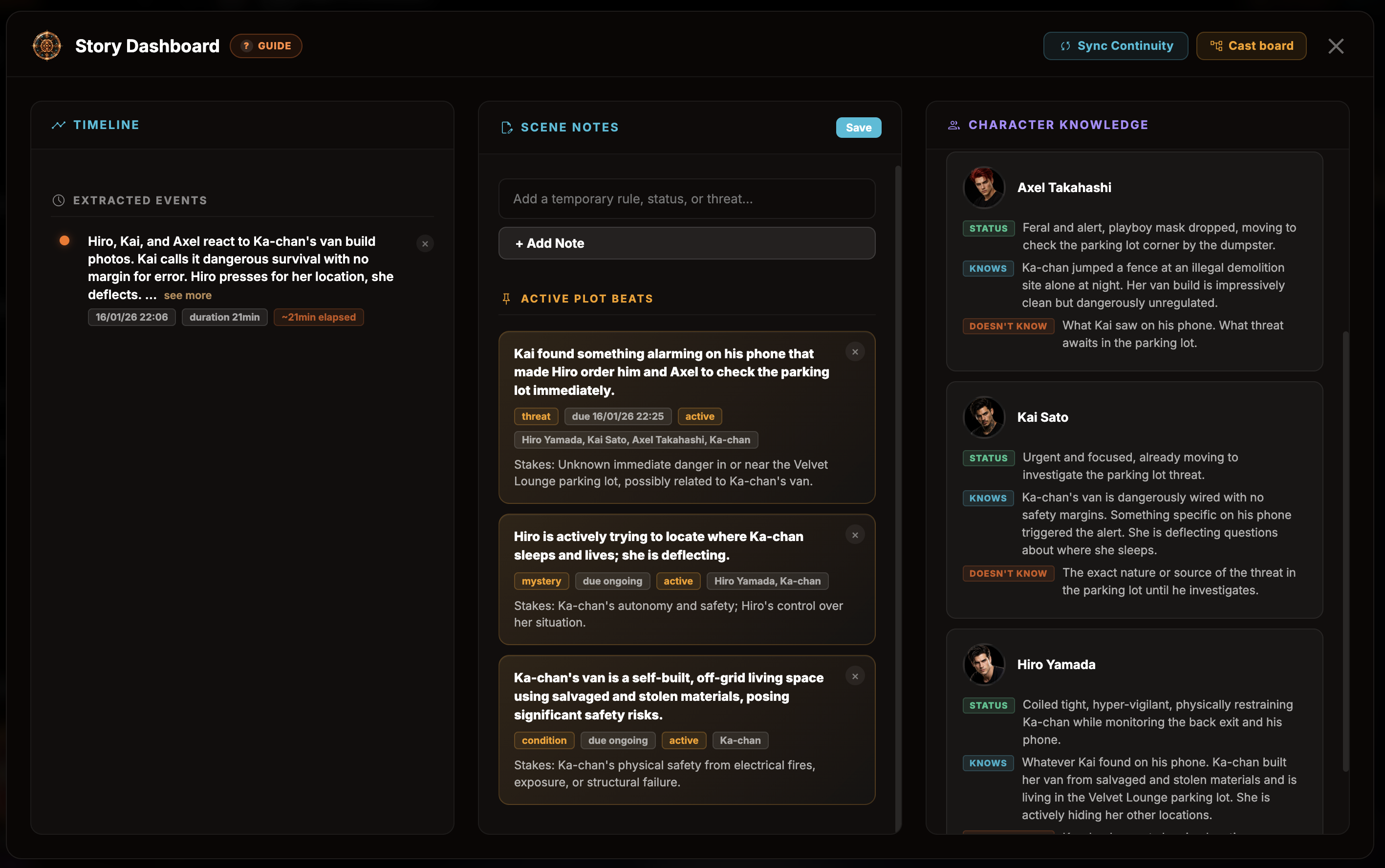
Timeline & Chronicle:
The Story Dashboard automatically extracts a chronological list of events and maintains a Master Chronicle of your entire scenario. This gives the AI perfect long-term context without you having to write summaries.
Scene Notes & Active Plot Beats:
Inject temporary rules, establish the current stakes, or define active threats. Active Plot Beats are dynamic conditions that the AI MUST resolve or acknowledge in the upcoming responses.
Character Knowledge:
The AI actively tracks what characters know versus what they don't know. This prevents metagaming and allows for dramatic irony, secrets, and natural revelations.
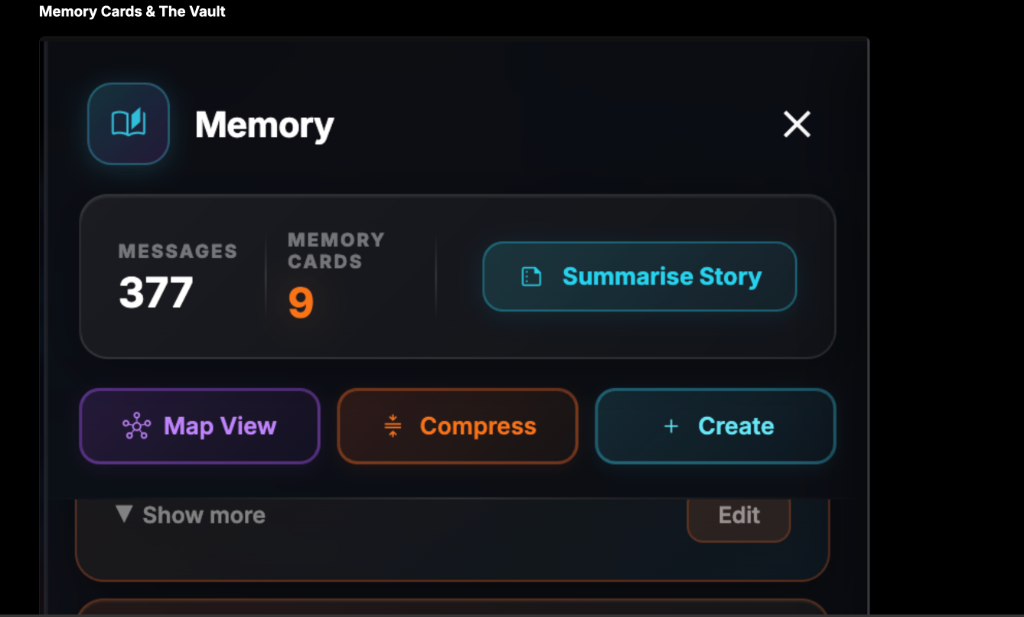
Memory Cards & The Vault
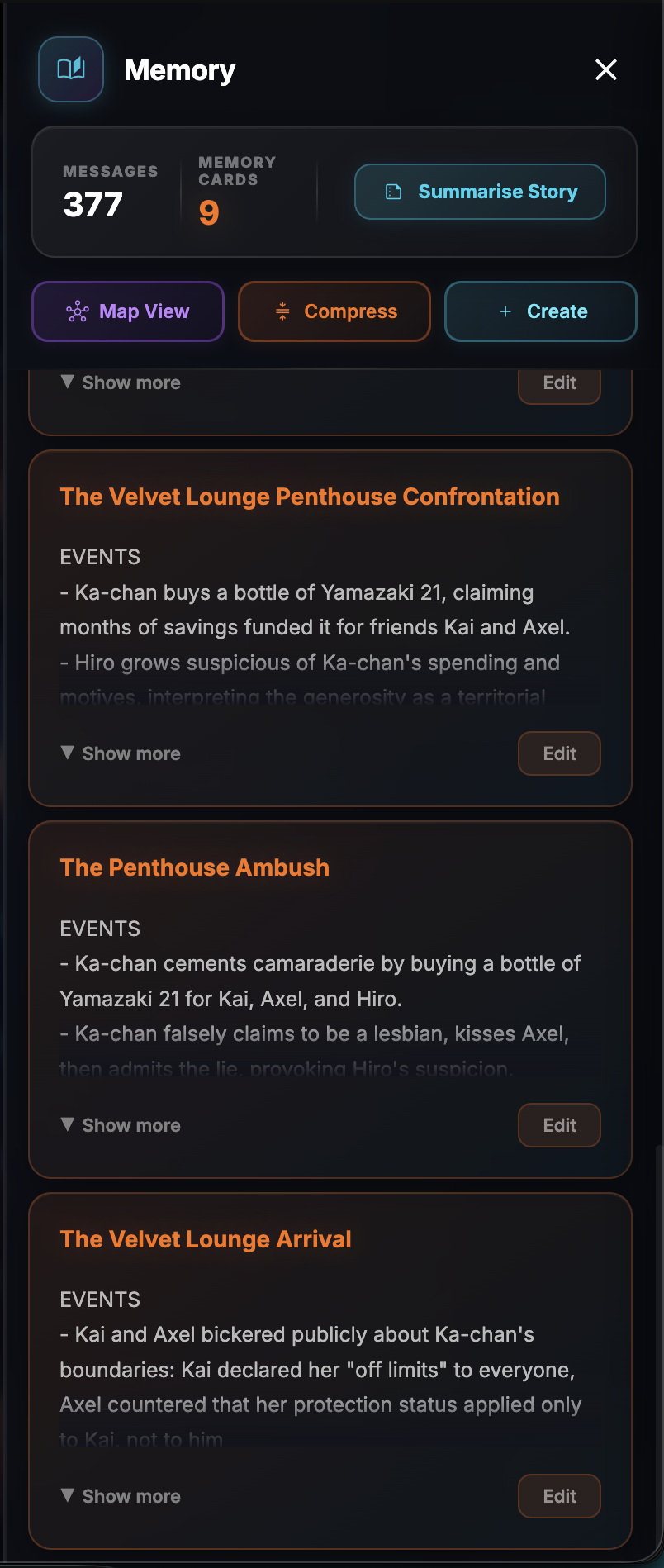
Visual Memory Cards:
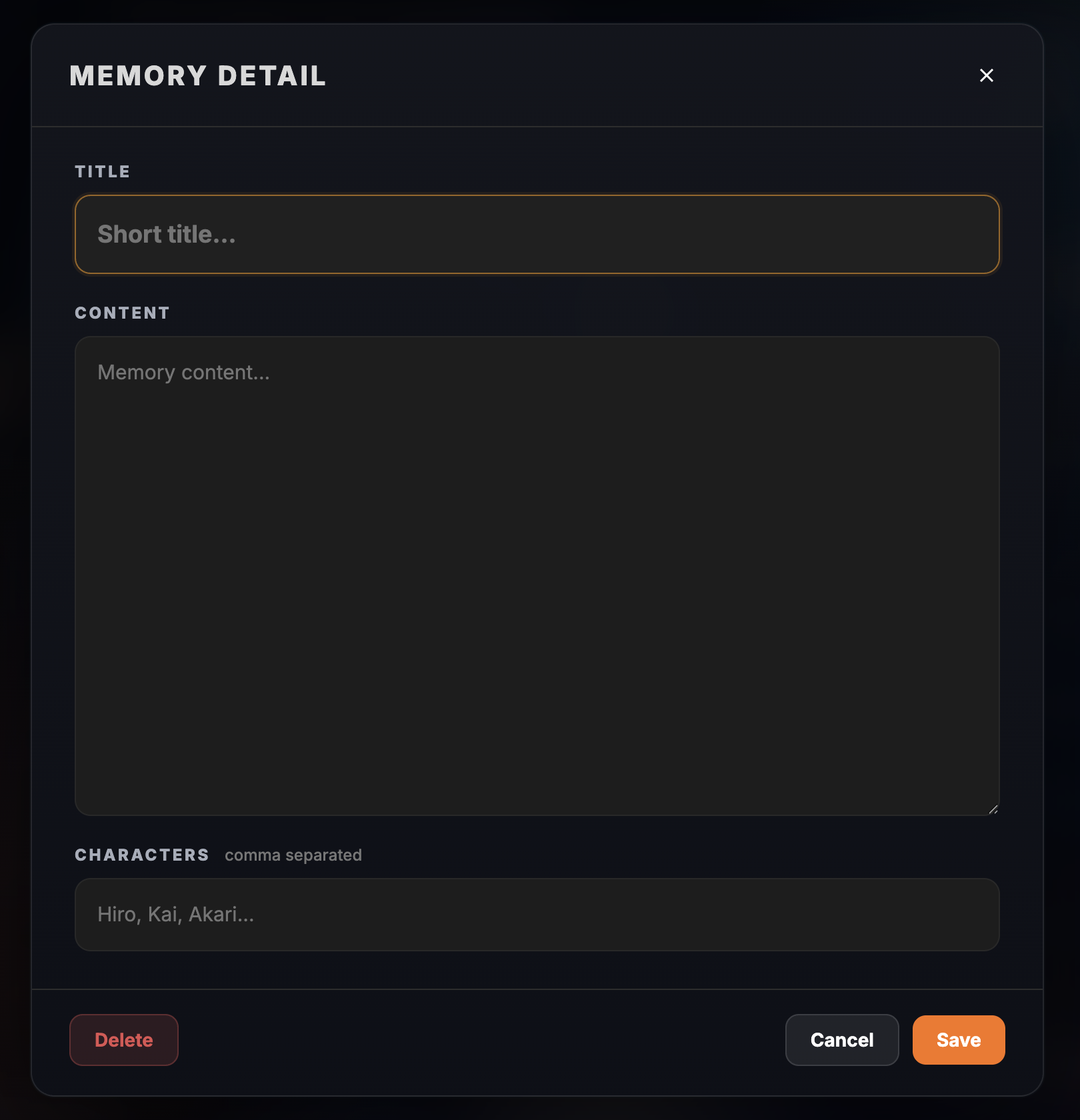
When something major happens, the AI distills the event into a tangible Memory Card. You can also manually create cards.
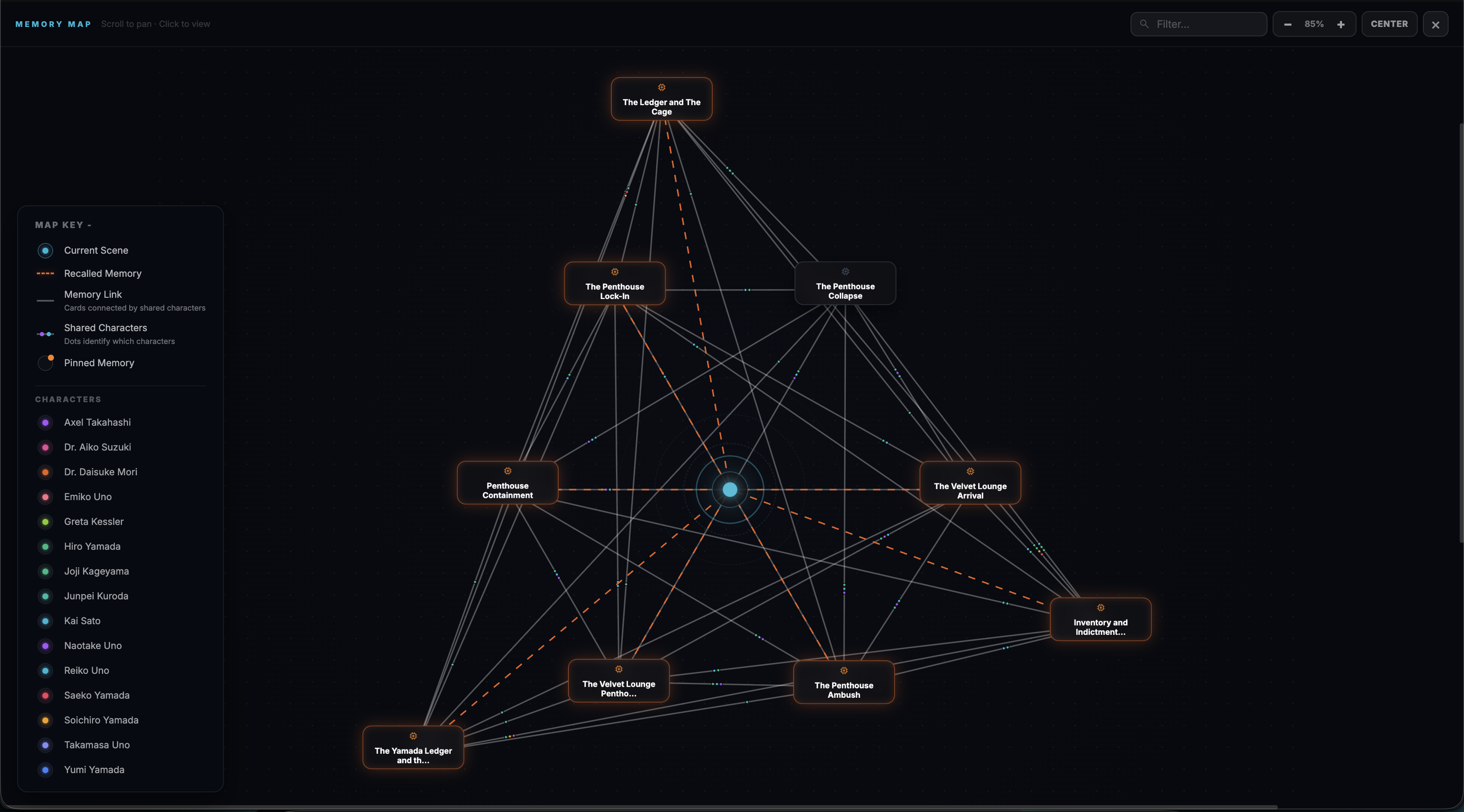
The Memory Map:
Accessible from the Canon Vault, the Memory Map is a dynamic, visual web that shows exactly how memories connect to characters and locations. Orange pulsating lines indicate which memories are actively influencing the AI's current generation.
The Cast Board & Continuity
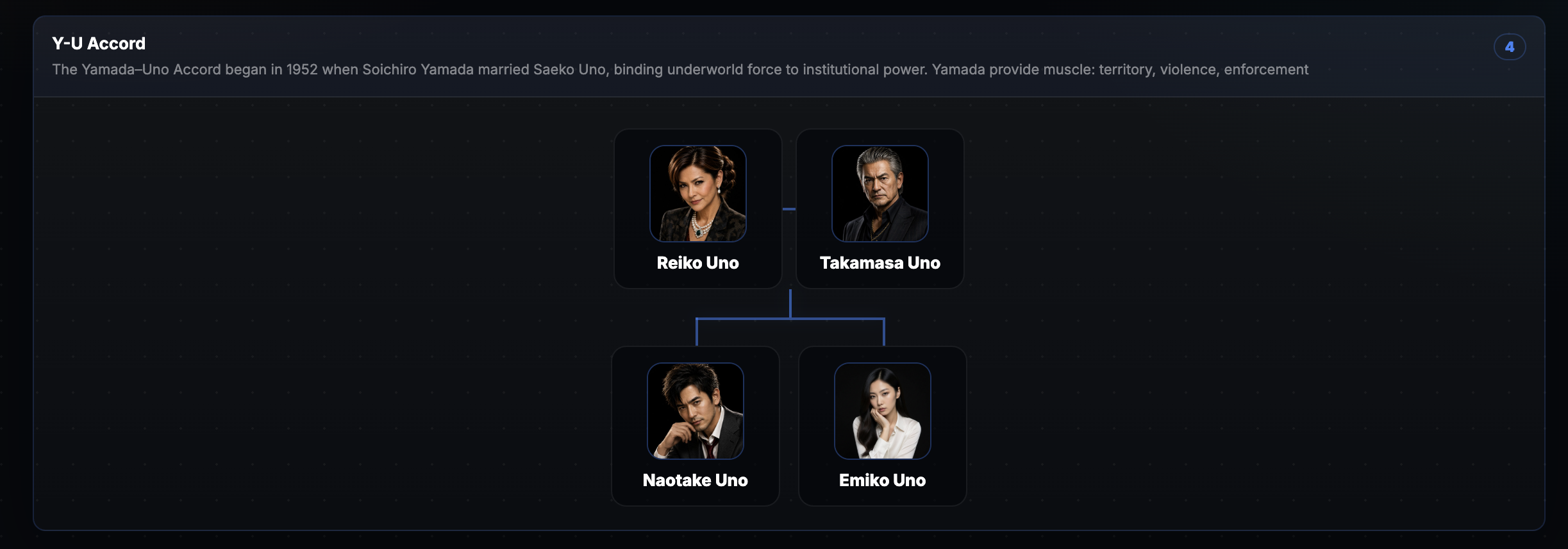
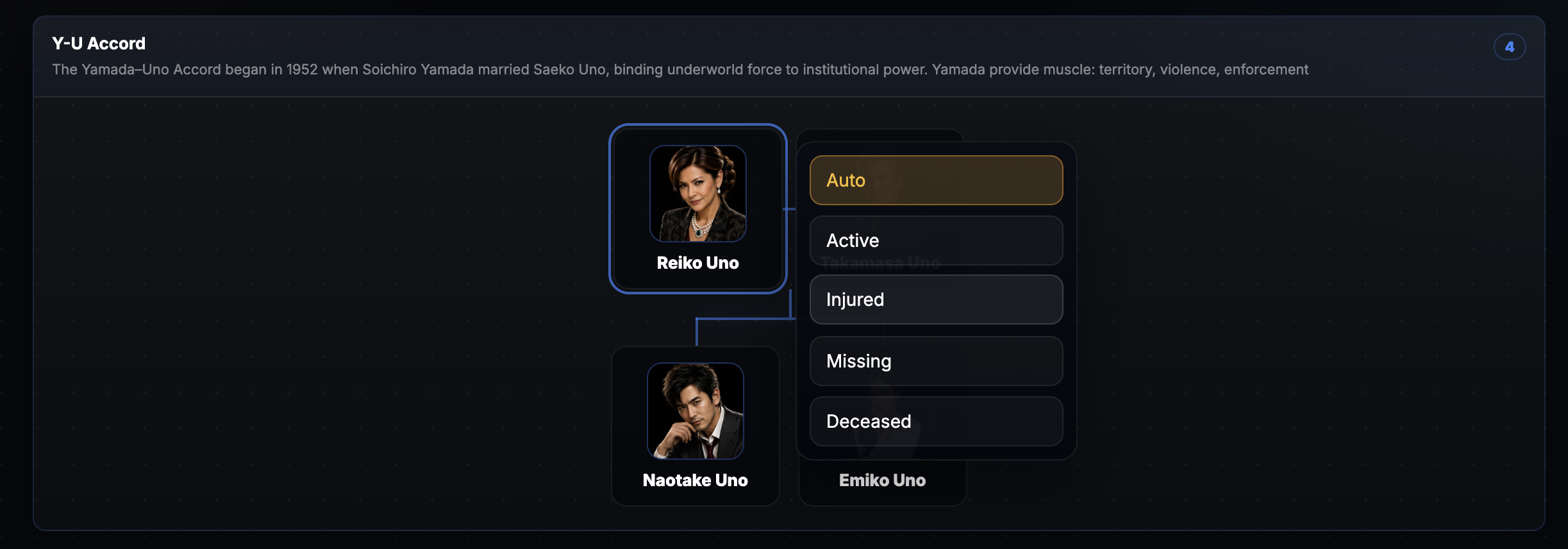
Live Status Tracking:
Through the Cast Board, you can monitor and override character statuses. Set a character to "Injured", "Missing", or "Deceased" and the AI will strictly adhere to that condition across all interactions.
Pinned Facts (Absolute Truths):
Found in the side panel, Pinned Facts are absolute, unbreakable rules injected directly into the AI's core directive. Use this for immediate pressure (e.g., "The ship is sinking in 5 minutes") or immutable physical laws.